ERP for Manufacturers in Punjab: Where to Start
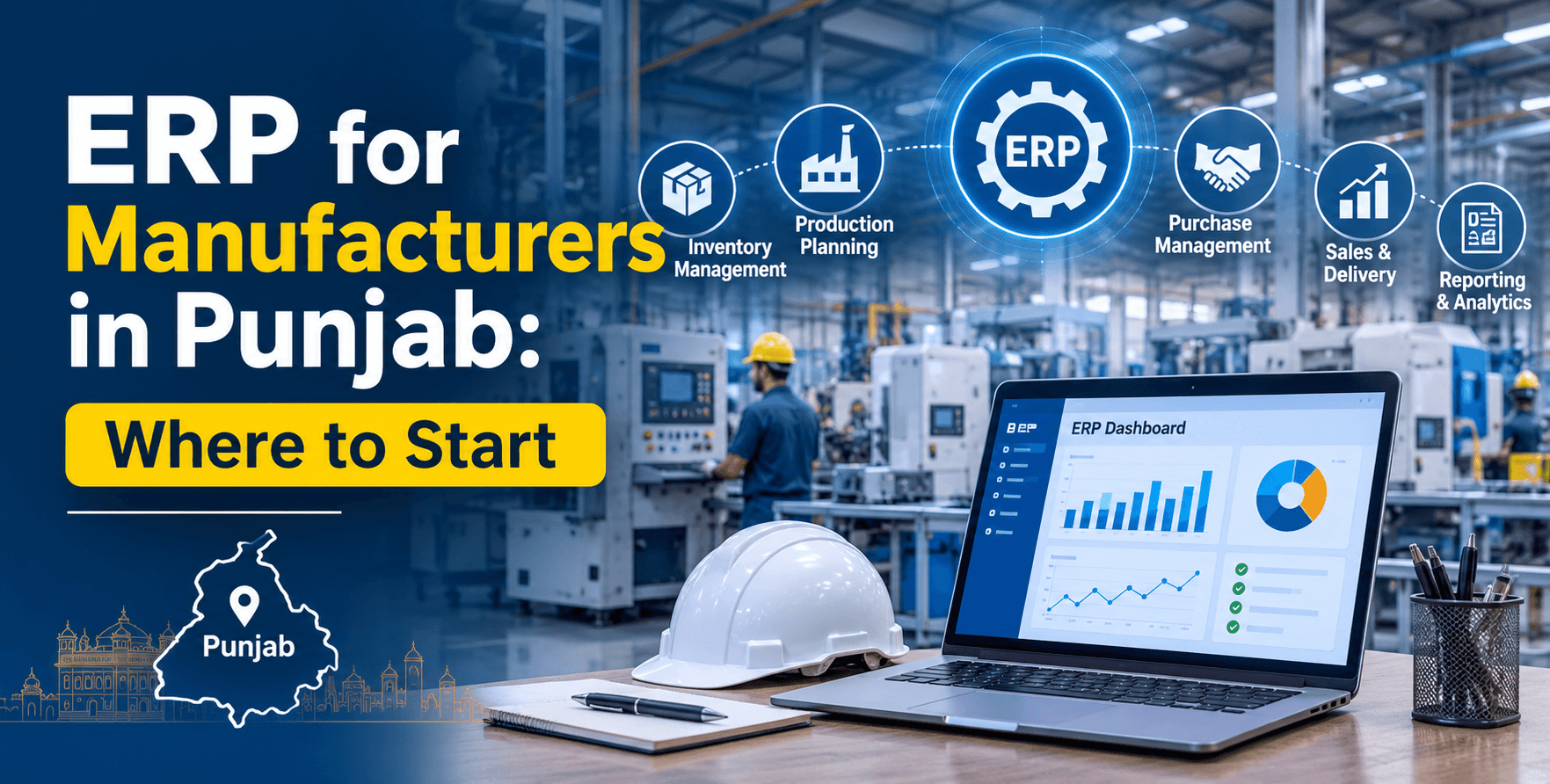
Punjab has a strong manufacturing sector, with businesses operating in industries such as automotive components, machinery, textiles, food processing, and industrial equipment. As manufacturing operations grow, managing inventory, production schedules, raw materials, orders, and accounts through separate systems can become increasingly difficult.
This is where an ERP system can help. For manufacturers looking for ERP for manufacturers in Punjab, the first step is understanding their business requirements and identifying the processes that need better control.
What Is ERP Software for Manufacturing?
Enterprise Resource Planning (ERP) software connects different business operations through a centralized system. Instead of maintaining separate records for inventory, purchasing, production, sales, and accounts, manufacturers can manage these activities through integrated software.
For example, when a customer places an order, the business can check stock availability, plan production, estimate material requirements, and track order progress. This improves coordination between departments and helps management make informed decisions.
The exact features depend on the ERP solution selected and the manufacturer's operational requirements.
Why Do Manufacturers in Punjab Need ERP Software?
As manufacturing businesses expand, manual processes and disconnected spreadsheets can create operational challenges. An ERP system can help address several common problems.
1. Inventory and Raw Material Management
Manufacturers need to maintain the right quantity of raw materials, components, and finished goods. ERP software helps track stock levels, material consumption, and stock movements. This can reduce avoidable shortages, excess inventory, and delays caused by missing materials.
2. Production Planning and Scheduling
Production teams must coordinate machines, workers, materials, and delivery deadlines. An ERP solution can help organize production schedules, monitor job progress, and improve visibility into manufacturing activities.
3. Purchase and Supplier Management
Manufacturing operations often depend on multiple suppliers. ERP software can centralize purchase orders, supplier information, and material requirements, making it easier to coordinate procurement activities.
4. Sales Orders and Delivery Tracking
Managing customer orders manually can make it difficult to identify pending orders and delivery delays. An ERP system can help businesses monitor order status, coordinate production with demand, and improve communication between sales and operations teams.
5. Reporting and Business Visibility
Business owners need reliable information about stock, production, purchasing, sales, and costs. ERP reporting can bring important operational information together, helping management identify problems and plan future business activities.
How to Choose the Right ERP for Manufacturers in Punjab
Choosing ERP software requires more than comparing features or prices. Manufacturers should first evaluate their existing processes and future business goals.
Start by identifying operational problems.
List the areas that need improvement, such as inventory tracking, production planning, purchase management, order processing, or financial reporting. This helps define the purpose of the ERP implementation.
Choose features based on your industry.
A small manufacturing unit may need inventory, purchase, sales, and basic production management. A larger factory may require more advanced production planning, quality control, machine-level tracking, or integration with existing systems.
Consider customization and integration.
Every manufacturing business has its own workflow. The selected solution should support essential business processes and, where necessary, integrate with existing accounting tools, applications, or other business systems.
Evaluate usability and scalability.
Employees should be able to use the system without unnecessary complexity. The ERP should also accommodate business growth, additional users, new locations, and increasing transaction volumes.
Plan implementation and employee training.
Successful ERP implementation involves more than installing software. Data migration, process configuration, employee training, testing, and ongoing support are important parts of the process.
Custom ERP Solutions for Manufacturing Businesses
Off-the-shelf ERP software can work well for businesses with standard requirements. However, manufacturers with specialized production processes or unique reporting needs may benefit from a customized solution.
A custom ERP system can be designed around the company's existing workflows, approval processes, inventory structure, and reporting requirements. Businesses should assess the development cost, implementation timeline, maintenance needs, and long-term scalability before choosing this approach.
Manufacturers exploring integrated business systems can learn more about ERP solutions for business operations to understand how ERP software can support their operational requirements.
Where Should Manufacturers Start?
Manufacturers planning to adopt ERP software should begin with a clear assessment of their current operations. Identify the most time-consuming processes, document existing challenges, and prioritize the features that will deliver practical value.
It is also helpful to involve employees from production, inventory, purchasing, sales, and accounts when defining requirements. Their feedback can help ensure that the selected system addresses real operational problems.
Rather than implementing every feature at once, businesses can prioritize essential modules and expand the system as their needs evolve.
Conclusion
For businesses evaluating ERP for manufacturers in Punjab, the right starting point is a clear understanding of their production processes, inventory requirements, and business objectives. A well-planned ERP solution can improve operational visibility, support coordination between departments, and help manufacturers manage growth more effectively.
Bhavya Enterprises provides software development solutions for businesses looking to improve their digital operations. Manufacturers can evaluate their requirements and explore suitable ERP options before deciding on an implementation approach.
Looking for an ERP solution for your manufacturing business? Explore our ERP solutions to learn more.