How to Choose a Software Company in Chandigarh: 10 Questions to Ask Before Hiring
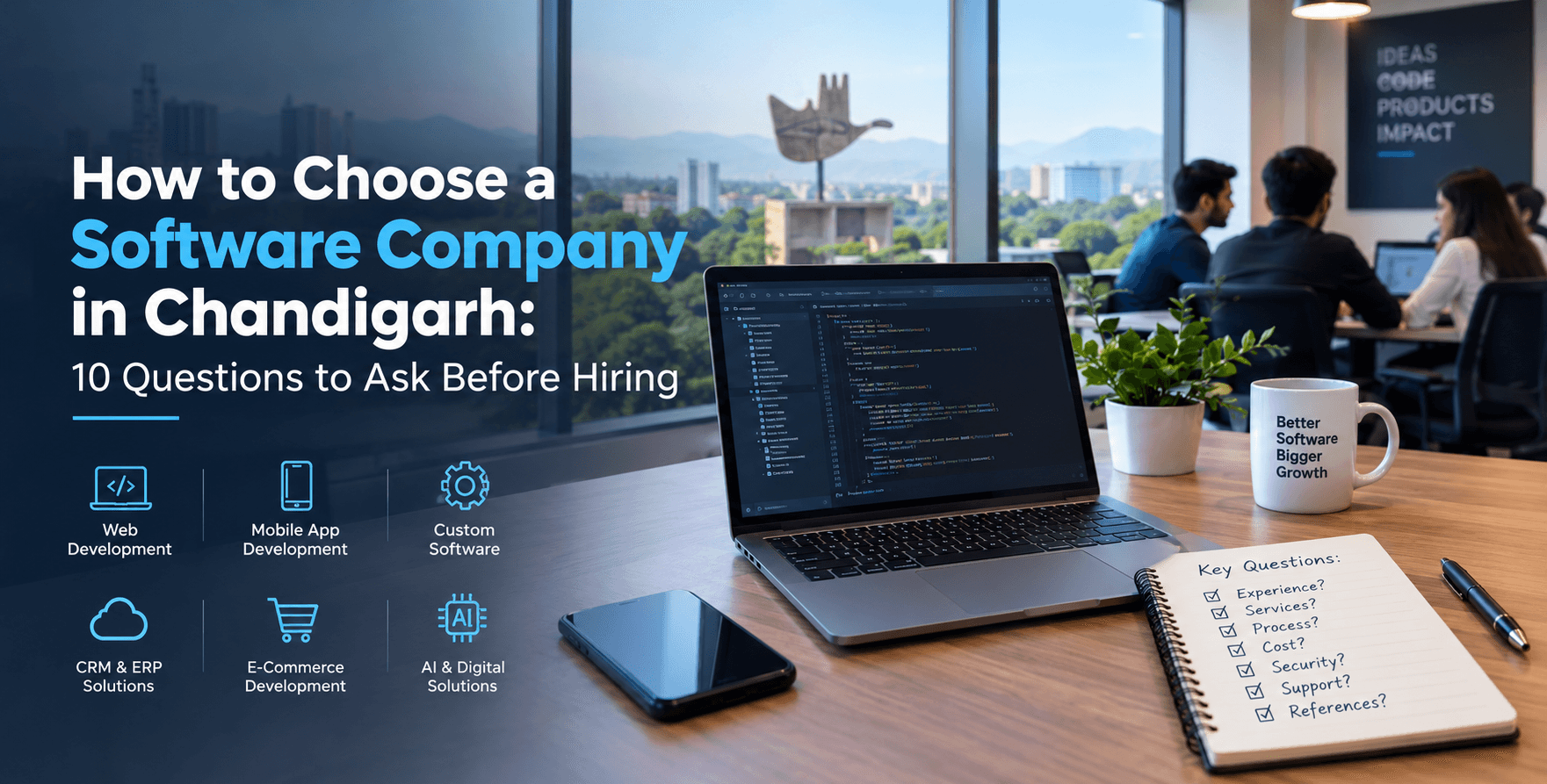
Choosing the right software development partner is an important decision for any business. Whether you need custom business software, a customer relationship management (CRM) system, an enterprise resource planning (ERP) solution, or a web-based application, the right technology partner can help improve efficiency and support long-term growth.
Chandigarh has a growing technology and business ecosystem, with companies offering different software development services. However, not every provider will be the right fit for your requirements, budget, and future plans.
Before hiring a software company in Chandigarh, it is important to understand its technical capabilities, development process, communication practices, and post-launch support. Asking the right questions can help you compare providers and make a more informed decision.
Here are ten important questions to ask before selecting a software development company.
1. Have You Worked on Similar Projects Before?
Start by asking whether the company has experience developing software similar to what your business needs.
For example, a business looking for inventory management software should look for a provider that understands stock tracking, purchase orders, reporting, and related workflows. Similarly, a company that needs a CRM system should choose a developer familiar with customer management and sales processes.
Ask to see relevant projects, case studies, or portfolio examples. Previous experience can help you understand whether the company has the knowledge required to handle your project.
2. What Software Development Services Do You Offer?
Software projects can vary significantly in complexity. Some businesses need a simple web application, while others require a customised platform with multiple integrations.
Ask whether the company offers services such as custom software development, web application development, mobile app development, CRM and ERP solutions, or business process automation.
A provider that understands your broader business requirements may also help you identify opportunities to connect different systems and reduce manual work.
Before proceeding, make sure its services match your current needs and future technology plans.
3. How Will You Understand My Business Requirements?
Good software should solve a specific business problem rather than simply provide technical features.
Ask how the company gathers requirements before starting development. Does it discuss your existing processes, identify operational challenges, and define the expected outcomes?
For instance, if your employees manage invoices, customer records, and stock through separate spreadsheets, the development team should understand how these activities connect before recommending a solution.
A clear requirement-gathering process helps reduce misunderstandings and unnecessary changes during development.
4. What Is Your Development Process and Timeline?
Understanding the development process helps you know what to expect at each stage.
Ask the company to explain how it handles planning, design, development, testing, deployment, and maintenance. You should also ask how progress will be communicated throughout the project.
Request an estimated timeline with major milestones. The timeline should account for the project's complexity, required integrations, testing, and feedback.
Be cautious of unrealistic promises. A reliable development partner should provide a reasonable estimate and explain the factors that could affect delivery.
5. How Much Will the Software Development Project Cost?
Budget is one of the most important considerations when hiring a software development company.
Instead of asking only for the lowest price, request a detailed quotation explaining the proposed features, development stages, integrations, testing, and deployment costs.
Also, clarify whether the quotation includes hosting, third-party subscriptions, ongoing maintenance, and future upgrades.
Custom software costs depend on the scope, complexity, technology, and level of customisation. A transparent quotation makes it easier to compare providers and avoid unexpected expenses later.
6. Which Technologies Will You Use?
The technology used to build your software can affect its performance, scalability, security, and maintenance requirements.
Ask the company which programming languages, frameworks, databases, and infrastructure it recommends for your project. More importantly, ask why those technologies are suitable for your business requirements.
The best solution is not necessarily the one using the newest technology. It should be reliable, maintainable, and capable of supporting your expected workload.
Your development partner should explain technical decisions in simple language and help you understand their long-term implications.
7. How Will You Protect My Business Data?
Business software may contain customer details, financial records, employee information, and confidential operational data.
Ask what security measures the company follows during development and after deployment. Important considerations include access controls, secure authentication, data backups, software updates, and protection against common vulnerabilities.
If your software handles sensitive information, discuss applicable data protection requirements and how information will be stored and accessed.
You should also clarify who will own the software, source code, and associated data after the project is completed.
8. Will the Software Be Customised for My Business?
Every business has different workflows, reporting requirements, and operational challenges.
Ask whether the proposed solution can accommodate your existing processes and whether additional features can be introduced as your business grows.
For example, a growing company may initially need customer management and reporting features but later require inventory tracking, automated notifications, or integrations with accounting tools.
A suitable software solution should address your immediate requirements while allowing reasonable room for future expansion.
Discuss which features are included in the initial scope and how additional requirements will be estimated and implemented.
9. What Support Will You Provide After Launch?
Software development does not end when an application goes live. Your team may need technical assistance, bug fixes, updates, and improvements after launch.
Ask whether the company offers post-launch support, how issues are reported, and what response times you can expect.
Clarify the duration of any included warranty or support period. You should also understand whether ongoing maintenance is included in the original quotation or billed separately.
A clear support arrangement can help your business keep its software reliable and minimise disruption when problems occur.
10. Can You Provide References and a Clear Project Agreement?
Before making a final decision, ask for relevant client references or case studies where available.
You should also review the project agreement carefully. It should describe the scope of work, deliverables, milestones, payment terms, intellectual property ownership, confidentiality, and support responsibilities.
Make sure the agreement explains how changes to the original requirements will be handled.
A written agreement creates clarity for both parties and helps establish realistic expectations before development begins.
Final Thoughts
Choosing the right software development partner requires more than comparing prices. You need a company that understands your business objectives, communicates clearly, follows a structured development process, and provides appropriate support after launch.
Before selecting a software company in Chandigarh, compare its relevant experience, technical capabilities, security practices, pricing transparency, and long-term support options.
Take time to discuss your requirements with potential providers and ask for a proposal that clearly explains the recommended solution.
If you are exploring custom software or business technology solutions, Bhavya Enterprises can be a starting point for understanding available services and discussing your project requirements. Choose a development partner based on how well its capabilities align with your business goals, budget, and future plans.