Filing GSTR-1 and GSTR-3B Straight from Your Billing Software
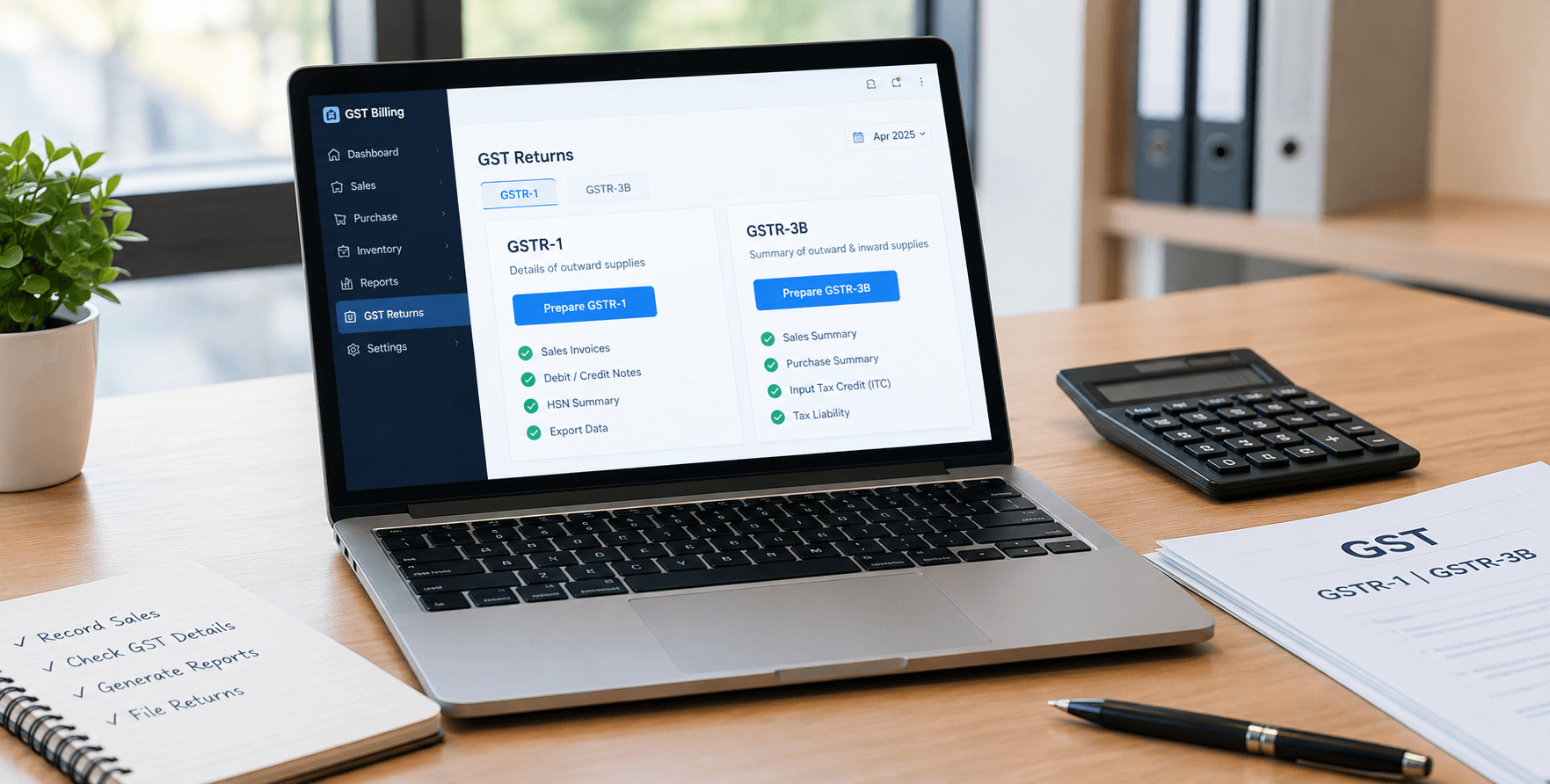
Managing GST returns can be time-consuming for businesses that handle multiple invoices, customer transactions, and tax records every month. Maintaining separate records for sales and then manually preparing GST return data can increase the chances of errors and delays.
A GST billing software solution helps businesses organize their invoices, maintain GST-related records, and prepare the information needed for return filing. With the right system, businesses can simplify the process of preparing GSTR-1 and GSTR-3B while keeping their billing information organized.
What Are GSTR-1 and GSTR-3B?
GSTR-1 is a GST return that reports details of outward supplies, including sales invoices, debit notes, credit notes, and other applicable transaction details.
GSTR-3B is a summary return used to report eligible outward and inward supplies, input tax credit (ITC), and the tax liability payable for the relevant period.
Although both returns relate to GST compliance, they serve different purposes. Businesses need accurate sales and purchase records to prepare the required information for each return.
How GST Billing Software Helps With GSTR-1 Filing
Preparing GSTR-1 starts with maintaining accurate sales records. A billing system can help businesses record customer details, invoice numbers, taxable values, GST rates, and tax amounts during everyday transactions.
When this information is maintained properly, businesses can use the available reports or supported GST export features to organize invoice data for return preparation.
Key benefits include:
Organized sales invoices: Keep transaction records in one place for easier reference.
Accurate GST calculations: Apply the appropriate tax rates and review taxable values and tax amounts.
Easier invoice reconciliation: Identify missing, duplicate, or incorrect entries before preparing return data.
Reduced manual work: Use available reports and export features instead of compiling every invoice separately.
Better record management: Retrieve past invoices and sales information when required.
The exact features depend on the software. Before choosing a solution, confirm whether it supports GST return reports, compatible data exports, or direct integration with the GST portal.
Can You File GSTR-3B Through Billing Software?
A billing system can help prepare the information needed for GSTR-3B, including sales summaries and relevant tax figures. However, the extent of automation depends on the software's capabilities and integrations.
Businesses must also consider eligible input tax credit, reverse charge transactions, adjustments, and other applicable details that may not be available from sales invoices alone.
Before submitting GSTR-3B, reconcile the relevant figures with purchase records, available GST portal information, and other applicable documents. Review the tax liability carefully and complete filing and payment through the supported filing process.
Important: Generating a report or exporting data does not automatically mean that a GST return has been filed. Confirm whether your software supports direct filing or only prepares data for submission.
Steps to Prepare GST Returns Using Billing Software
A simple process can help businesses manage their monthly or quarterly GST compliance more efficiently.
Record transactions: Enter sales invoices and relevant customer details accurately.
Review GST information: Check GSTINs, invoice dates, tax rates, taxable values, and tax amounts.
Generate reports: Use the available GST reports or export features to organize the required information.
Reconcile records: Compare the figures with accounting records and relevant information available on the GST portal.
Review both returns: Check GSTR-1 details and calculate the figures required for GSTR-3B.
Complete filing: Submit the returns through the applicable GST portal process or a supported integrated solution, and retain the acknowledgements.
Always follow the applicable GST rules, return requirements, and due dates for your business.
Choose the Right GST Billing Software
The right billing solution can make everyday invoicing and GST record management easier. When evaluating software, look for features such as GST-compliant invoicing, customizable tax settings, sales reports, data export options, invoice tracking, and reliable record storage.
Businesses that process a high volume of transactions may also benefit from accounting integration and automated reconciliation features, where available.
Explore GST Billing Software to learn more about software options that can help organize billing activities and GST-related records.
Conclusion
Preparing GSTR-1 and GSTR-3B becomes more manageable when sales, invoices, and tax information are maintained accurately throughout the reporting period. GST billing software can reduce repetitive data entry, improve record organization, and help businesses prepare the information needed for return filing.
The key is to choose a solution that matches your business requirements, verify its GST reporting capabilities, and review all figures before submitting returns. With accurate records and a consistent process, businesses can make GST compliance more organized and efficient.