Why You Should Own Your Software's Source Code
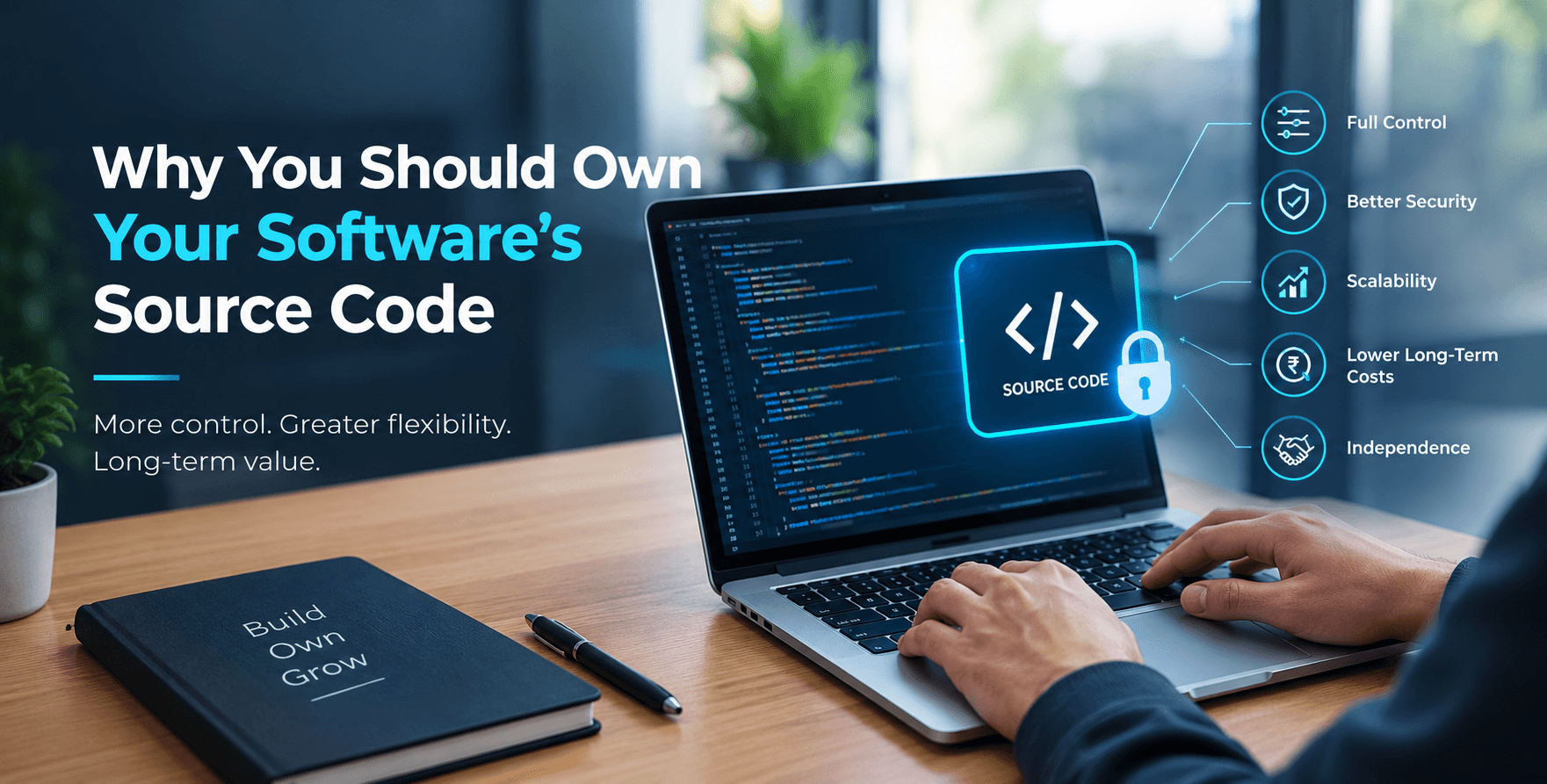
When investing in custom software, businesses often focus on features, development costs, and delivery timelines. However, one important factor is frequently overlooked: who owns the software's source code?
Source code is the underlying set of instructions developers write to build a software application. It determines how the application works, how its features operate, and how it can be modified in the future.
For businesses investing in custom software development, owning the source code can provide greater control, flexibility, and long-term value. Without clear ownership rights, a company may become dependent on its software vendor for even minor changes or updates.
Let's explore why source code ownership matters and what businesses should consider before starting a software development project.
What Does Owning Your Software's Source Code Mean?
Owning your software's source code generally means having the legal rights to use, modify, maintain, and further develop the code according to the terms of your agreement.
However, receiving a copy of the source code does not automatically mean you legally own it. Ownership and usage rights depend on the development contract, intellectual property clauses, and any third-party components involved.
Before beginning a project, businesses should clearly establish who owns the custom-developed code and what rights they receive when the project is completed.
1. Complete Control Over Your Software
One of the biggest advantages of source code ownership is control.
When your business owns the necessary rights to its software, you can decide how the application evolves. You can add new features, improve existing functionality, change workflows, or adapt the system to changing business requirements.
For example, a company using custom CRM software may eventually need automated reports, additional user roles, or integration with a new accounting system. With appropriate source code ownership and access, these changes can be managed more flexibly.
This control helps businesses ensure that their software continues to support their operational goals.
2. Reduced Dependence on a Single Vendor
Businesses sometimes become dependent on the original development company because only that company can access or modify the application's code.
This situation can create difficulties if the vendor changes its pricing, becomes unavailable, or no longer provides the required support.
When you have the appropriate ownership rights, complete source code access, and technical documentation, you have more freedom to work with another qualified development team.
This reduces the risk of being locked into one vendor and gives your business more options for future maintenance and development.
3. Better Long-Term Cost Management
Software requires ongoing maintenance, security updates, bug fixes, and improvements. If your business cannot access or control its source code, even small changes may require continued involvement from the original vendor.
Owning the source code does not eliminate maintenance costs, but it can give you greater flexibility when choosing who will maintain the software.
You can compare development proposals, plan improvements according to your budget, and avoid unnecessary restrictions on future development.
For businesses planning to use software for several years, these options can make long-term technology investments easier to manage.
4. Flexibility to Scale and Add New Features
Business requirements change as companies grow. A small business might initially need basic billing software but later require inventory management, customer records, advanced reporting, or multiple branch support.
With appropriate source code ownership, businesses can work with developers to expand their applications as requirements evolve.
A well-structured custom solution can be adapted to support new workflows, additional users, and integrations with other business systems.
If your company needs a solution designed around its specific operations, explore our Custom Software Development Services to understand how tailored software can support your business requirements.
5. Improved Security and Maintenance Options
Software security is an ongoing responsibility. Applications need regular updates, vulnerability fixes, and compatibility improvements to remain reliable.
Access to source code allows qualified developers to inspect the implementation, identify potential issues, and make necessary changes. However, source code ownership alone does not guarantee better security. Secure development practices, appropriate access controls, regular testing, and timely updates remain essential.
Businesses should also ensure they receive the documentation, deployment instructions, and technical information needed to maintain their software effectively.
6. Protect Your Business's Intellectual Property
Custom software may contain valuable business logic, specialized workflows, and functionality developed specifically for your organization.
Clear source code ownership terms help protect your investment and establish how the software can be used, modified, transferred, or commercialized.
Before signing a development agreement, review its intellectual property provisions carefully. Confirm whether ownership transfers after payment, whether the developer retains rights to reusable components, and whether third-party libraries have separate licensing requirements.
Getting these details in writing can help prevent misunderstandings later.
What Should You Check Before Hiring a Software Development Company?
Before starting a custom software project, make sure your agreement addresses the following points:
Source code delivery: Confirm that the complete agreed-upon source code will be provided.
Ownership rights: Clearly define who owns the newly developed code and when ownership transfers.
Documentation: Request relevant technical documentation and deployment instructions.
Third-party components: Understand the licensing terms for external libraries, frameworks, and tools.
Maintenance and support: Clarify who will handle updates, bug fixes, and future improvements.
Access and handover: Ensure you receive the agreed credentials, repositories, and other project assets.
These steps can help you establish a stronger foundation for your software investment.
Conclusion
Owning your software's source code is an important consideration when investing in custom software development. It can provide greater control, reduce dependence on a single vendor, improve flexibility, and help protect your long-term investment.
However, source code ownership should always be supported by a clear legal agreement, proper documentation, and a practical maintenance plan.
Before choosing a software development partner, look beyond the initial cost and features. Make sure you understand your rights to the software being developed for your business.
The right software investment is not just about building an application today. It is about having the freedom to maintain, improve, and grow it as your business evolves.