Electrical, UPS and Data Cabling for a New Branch: A Planning Guide
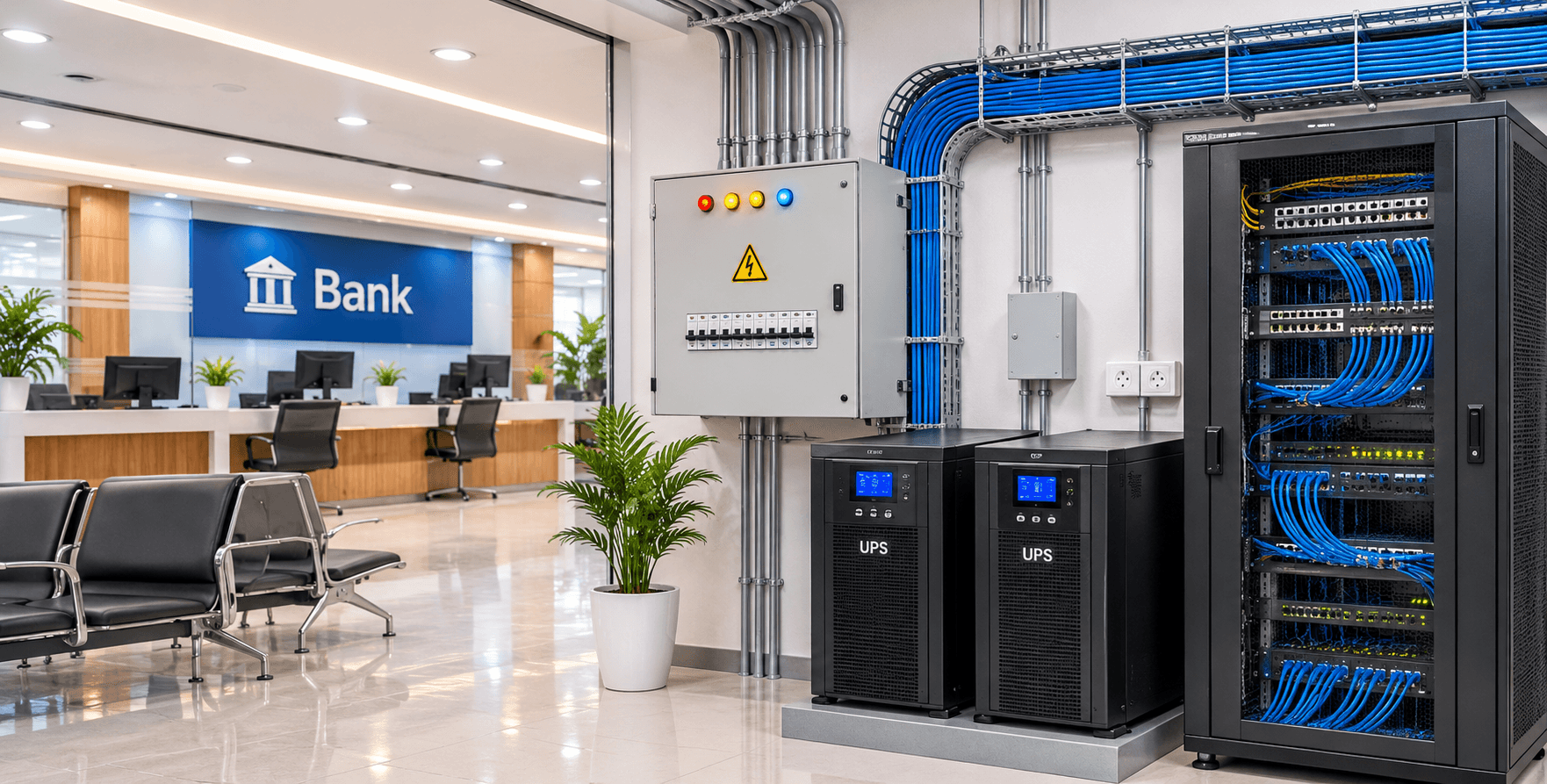
Setting up a new bank branch or commercial office involves much more than designing interiors, installing furniture and creating customer service areas. A reliable electrical system, uninterrupted power backup and properly planned data cabling are equally important for smooth daily operations.
From computers and printers to networking equipment, security systems and air conditioning, every part of a modern branch depends on a well-planned electrical and IT infrastructure. Poor planning can lead to power interruptions, network connectivity issues, safety risks and expensive modifications after the branch becomes operational.
This is why branch electrical UPS planning should be considered an essential part of every new branch setup project.
1. Start with an Electrical Load Assessment
Before installing electrical wiring, it is important to identify the total power requirements of the branch. Different areas have different electrical needs.
For example, teller counters may require computers, printers and other banking equipment, while server rooms need dedicated power arrangements. Customer waiting areas, cabins, meeting rooms and workstations also require properly positioned electrical points.
A detailed electrical load assessment helps determine:
Total connected electrical load.
Number and location of power outlets.
Lighting and air-conditioning requirements.
Dedicated circuits for important equipment.
Future expansion requirements.
Planning these requirements in advance helps avoid overloaded circuits and unnecessary electrical modifications.
2. Plan UPS and Power Backup Requirements
Power interruptions can affect customer service, banking operations and internal communication. A suitable Uninterruptible Power Supply (UPS) system helps keep essential equipment running during power failures.
When planning UPS installation, businesses should consider which equipment requires backup power, how much backup time is needed and whether a centralized or distributed UPS arrangement is more suitable.
Important considerations include:
Calculate the backup load based on connected equipment.
Identify critical systems such as computers, networking devices and essential banking equipment.
Select suitable UPS capacity with an appropriate safety margin.
Plan battery placement, ventilation and maintenance access.
Provide proper electrical protection and earthing.
UPS capacity should be selected after consulting qualified electrical professionals. A properly planned backup system reduces operational disruptions and improves branch reliability.
3. Design Structured Data and Network Cabling
Modern branches depend on stable network connectivity for communication, business applications, transactions and internal systems.
Unplanned cabling can create messy workstations, difficult maintenance and connectivity problems. Therefore, data cabling should be planned alongside the electrical layout.
A structured cabling plan should include:
Network points for computers and workstations.
Dedicated connections for printers and other devices.
Proper routing of LAN cables.
Server and network rack locations.
Cable management and labelling.
Provision for CCTV, access control and other connected systems.
Keeping electrical and data cabling properly organised makes maintenance easier and allows future technology upgrades without major changes.
4. Keep Electrical and Data Routes Organised
Electrical and data cables should follow a properly designed routing plan. Their separation, protection and installation must follow applicable electrical and safety standards.
Cable trays, conduits, trunking and suitable containment systems help maintain an organised infrastructure.
Special attention should be given to server rooms, teller counters, workstations and equipment-heavy areas. Proper labelling also helps technicians identify connections quickly during maintenance or troubleshooting.
5. Consider Safety, Earthing and Compliance
Electrical safety should never be overlooked during branch construction or renovation.
Proper earthing, circuit protection, distribution boards, cable sizing and load balancing are important for protecting equipment and people.
The electrical installation should be reviewed by qualified professionals and comply with applicable electrical regulations and safety requirements.
Fire safety provisions, emergency lighting and safe access to electrical panels should also be considered during planning.
6. Coordinate Electrical Work with Interior Design
Electrical and networking requirements should be finalised before furniture installation and interior finishing.
For example, teller counters need power and data points at suitable locations. Workstations require convenient access to sockets, while server rooms need adequate space for racks, UPS equipment and cooling arrangements.
Coordination between electrical contractors, networking teams, interior designers and project managers helps prevent rework and delays.
For businesses planning a new branch, professional branch setup and interior solutions can help coordinate infrastructure requirements with the overall layout and execution process.
7. Test Everything Before Handover
Before making a new branch operational, all electrical and network installations should be tested.
A pre-handover checklist should include:
Electrical load and circuit testing.
UPS backup and battery performance checks.
Earthing and safety verification.
LAN connectivity testing.
Network rack and cable labelling inspection.
CCTV and access control connectivity checks.
Verification of power points and lighting.
Proper testing ensures that essential systems are ready before employees and customers start using the branch.
Conclusion
Electrical systems, UPS backup and data cabling are the foundation of a reliable and functional branch. Planning these requirements early helps businesses avoid unnecessary costs, improve safety and ensure smooth daily operations.
Whether it is a new bank branch or a commercial office, coordinated planning of electrical infrastructure, power backup, networking and interior execution makes the entire setup more efficient.
Bhavya Enterprises supports branch setup and interior execution requirements with a focus on organised planning and functional commercial spaces. A well-planned branch is not just about how it looks; it is also about how efficiently it operates.