Monsoon Problems in Bank Branches: Seepage, Electrical Issues & Shutter Maintenance
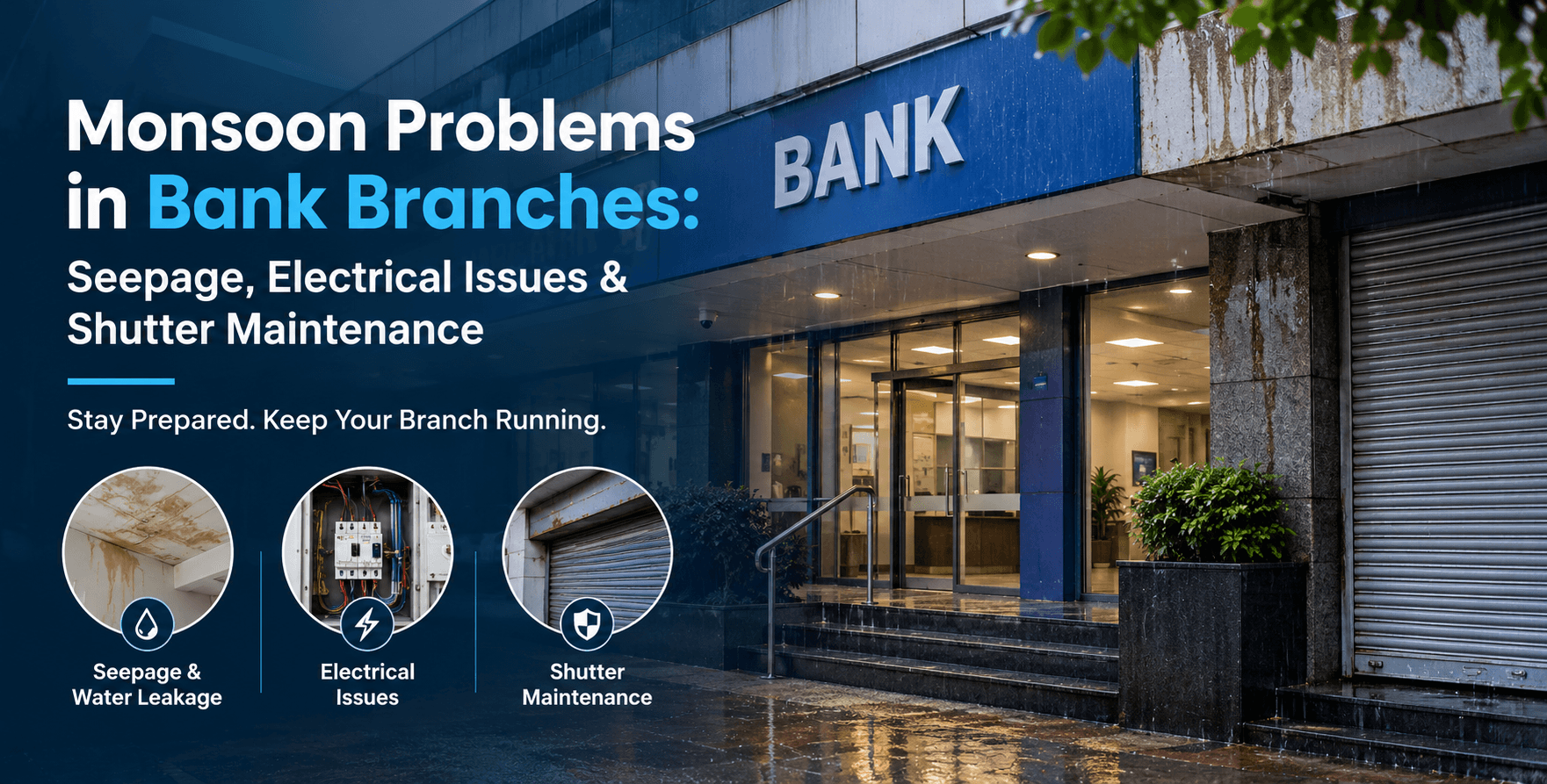
The monsoon season brings much-needed relief from the summer heat, but it also creates several maintenance challenges for commercial buildings, especially bank branches. Heavy rainfall, water seepage, damp walls, electrical faults, and damaged shutters can affect daily operations and create safety risks for employees and customers.
For banks, maintaining a safe and functional branch is essential because even minor maintenance issues can disrupt customer services, damage office equipment, and increase repair costs. Proper branch maintenance during the monsoon helps prevent these problems before they become expensive repairs.
In this article, we will explore common monsoon-related problems in bank branches and practical ways to prevent them.
1. Water Seepage and Roof Leakage
Water seepage is one of the most common problems during the monsoon. Rainwater can enter through damaged roofs, cracks in walls, poorly sealed windows, and weak waterproofing systems.
In bank branches, seepage can damage wall paint, ceilings, furniture, important documents, and electrical equipment. Continuous moisture may also lead to mould growth and unpleasant odours.
How to prevent it:
Inspect roofs and terraces before the monsoon begins.
Repair cracks in walls, ceilings, and external surfaces.
Check waterproofing around windows, doors, and roof joints.
Clean drainage outlets to prevent rainwater from accumulating.
Address damp patches immediately instead of waiting for visible damage to increase.
Regular inspections and timely waterproofing can help reduce water damage and maintain a professional banking environment.
2. Electrical Problems Caused by Rainwater
Heavy rainfall and moisture can increase the risk of electrical problems in commercial buildings. Water entering through ceilings, walls, or damaged electrical enclosures may affect wiring, switches, sockets, lighting systems, and other electrical installations.
Electrical issues can disrupt essential banking operations, including computer systems, networking equipment, CCTV cameras, and access control systems. Water near electrical installations can also create serious safety hazards.
How to prevent it:
Arrange inspections of electrical installations before the rainy season.
Check for damaged wiring, loose connections, and exposed cables.
Ensure electrical panels and distribution boards are properly protected from moisture.
Repair roof leaks near electrical equipment immediately.
Have a qualified electrician investigate any signs of water damage.
If water reaches electrical equipment, avoid touching the affected area and arrange a professional safety inspection before restoring power.
3. Shutter Problems and Entrance Damage
Bank branch shutters and entrance doors are exposed to rain, humidity, dust, and moisture throughout the monsoon. These conditions can cause rust, stiffness, corrosion, and difficulty opening or closing shutters.
A damaged shutter can compromise branch security, delay opening hours, and create inconvenience for staff. Water entering through gaps around entrances can also damage flooring and nearby fixtures.
How to prevent it:
Inspect shutters for rust, corrosion, and damaged components.
Check the smooth operation of shutter mechanisms and locking systems.
Lubricate moving parts using suitable products as recommended by the manufacturer.
Repair gaps around entrances to prevent rainwater from entering.
Ensure locks and security arrangements work correctly.
Scheduled maintenance helps keep shutters functional and supports the security of bank premises during heavy rainfall.
4. Blocked Drainage and Water Accumulation
Blocked drains, clogged rainwater pipes, and poorly maintained external drainage systems can cause water to accumulate around bank entrances and parking areas.
Standing water can damage flooring, create slippery surfaces, and make customer access difficult. In severe cases, water may enter the building and affect interior spaces.
How to prevent it:
Clean drains, gutters, and rainwater outlets regularly.
Remove leaves, plastic waste, and other debris from drainage areas.
Check the slope and condition of external flooring.
Inspect basement entrances and low-lying areas for water accumulation.
Arrange prompt repairs wherever drainage problems are identified.
Preventive drainage maintenance is particularly important before periods of heavy rainfall.
5. Damp Walls, Peeling Paint, and Interior Damage
High humidity and repeated exposure to moisture can cause paint to peel, plaster to deteriorate, and wooden furniture to swell. These problems can affect customer waiting areas, workstations, storage rooms, and other interior spaces.
Ignoring dampness may lead to more extensive repairs and higher maintenance costs later.
How to prevent it:
Identify and repair the source of moisture before repainting.
Use suitable waterproofing and moisture-resistant materials where required.
Improve ventilation in areas affected by dampness.
Inspect ceilings, wall corners, and storage spaces regularly.
Repair damaged plaster and paint after the affected surfaces have dried properly.
Addressing the underlying cause of dampness is more effective than simply covering visible stains.
Why Planned Branch Maintenance Matters During Monsoon
A planned maintenance schedule helps banks identify potential problems before heavy rainfall causes major damage. Regular inspections, preventive repairs, and quick responses to maintenance complaints can reduce operational disruptions and unexpected expenses.
Professional branch repair and maintenance services can help businesses manage building repairs, inspect vulnerable areas, and maintain safe and functional premises.
For banks operating across multiple locations, a systematic maintenance process also helps ensure that issues are reported, prioritised, and resolved consistently.
Conclusion
Monsoon-related problems such as water seepage, electrical faults, damaged shutters, blocked drainage, and damp walls can affect the safety and functionality of bank branches. However, many of these issues can be prevented through regular inspections, timely repairs, and a well-planned maintenance schedule.
Taking preventive action before and during the rainy season helps protect building interiors, electrical installations, security systems, and essential office equipment. With a proactive approach to branch maintenance during the monsoon, banks can minimise disruptions, control repair costs, and provide a safer environment for employees and customers.