Branch Repair & Maintenance: How an Annual Rate Contract Works
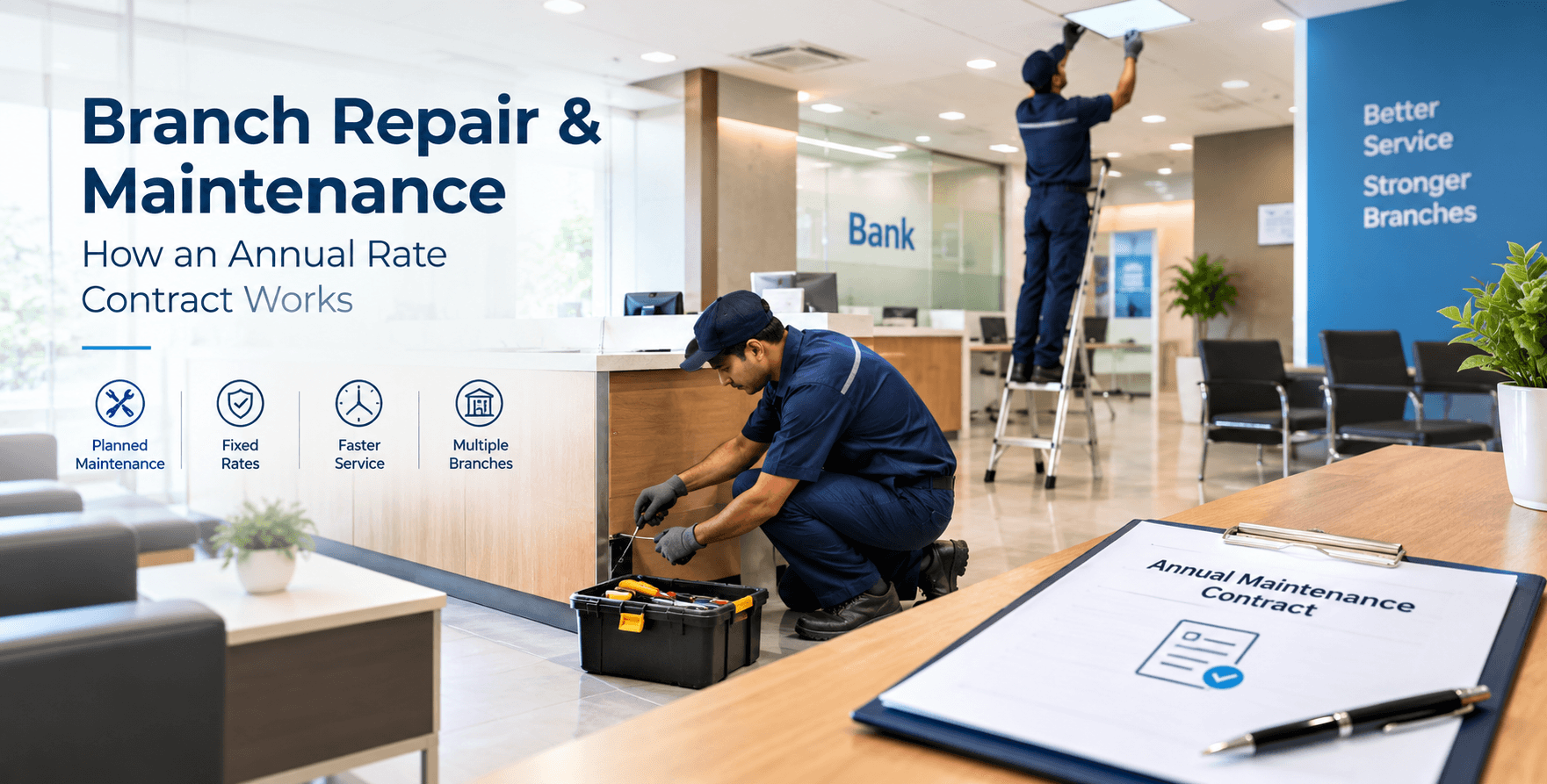
Banks, NBFCs, and other businesses operate through multiple branches and offices that require regular repair and maintenance. From damaged flooring and leaking ceilings to electrical faults, plumbing issues, and furniture repairs, even minor problems can affect daily operations and the customer experience.
Managing these repairs separately can be time-consuming and difficult to budget for. An annual rate contract offers a more organised approach by establishing agreed service rates and maintenance terms for a defined period.
What Is an Annual Rate Contract for Branch Maintenance?
An annual rate contract is an agreement between an organisation and a service provider that establishes pre-agreed rates for specified repair and maintenance work over a particular period, usually one year.
Under a branch repair and maintenance contract, the organisation can arrange covered services whenever required, according to the agreed scope, rates, and approval process.
For example, a bank with several branches may need carpentry repairs, electrical maintenance, painting, plumbing work, or minor civil repairs throughout the year. Instead of negotiating prices separately for every request, it can use an existing contract to manage these requirements more consistently.
The exact pricing structure depends on the agreement. Some contracts use fixed rates for individual jobs, while others cover specified services through a comprehensive annual maintenance arrangement.
How Does an Annual Rate Contract Work?
The process generally involves the following steps.
1. Assessing Maintenance Requirements
The organisation identifies its branches, existing maintenance issues, and expected repair requirements. The assessment may cover electrical systems, plumbing, flooring, doors, windows, furniture, painting, and other building-related work.
Clearly defining the requirements helps establish realistic service rates and responsibilities.
2. Defining the Scope of Work and Rates
The organisation and service provider agree on the types of work covered by the contract and the applicable rates. Depending on the arrangement, the agreement may include labour charges, material costs, inspection visits, emergency repairs, and replacement work.
It is important to specify which services are included and which require separate approval or additional payment.
3. Signing the Agreement
The contract documents the agreed rates, validity period, service expectations, response times, payment terms, and approval procedures.
For organisations managing multiple locations, it is also useful to define how maintenance requests will be raised, tracked, and approved by the relevant branch or regional office.
4. Raising Maintenance Requests
When a repair is required, the branch reports the issue to the designated service provider. The provider assesses the problem, confirms the work required, and proceeds according to the agreed terms and authorisation process.
Urgent issues, such as electrical faults or water leakage, may require faster attention, so emergency response arrangements should be clarified in advance.
5. Completing Work and Verifying Bills
After completing the repair, the service provider submits the relevant work report and invoice. The organisation verifies the completed work, applicable rates, and supporting documents before processing payment.
Maintaining records of requests, approvals, completed repairs, and expenditure helps improve accountability across all branches.
Key Benefits of a Branch Repair and Maintenance Contract
Better cost planning: Pre-agreed rates make it easier to estimate maintenance expenditure and reduce repeated price negotiations.
Consistent service delivery: A common set of terms helps maintain consistent standards across different branches and offices.
Faster repair coordination: An established service arrangement can simplify the process of assigning work and resolving maintenance issues.
Improved accountability: Documented service requests, work reports, and invoices make it easier to monitor performance and spending.
Reduced administrative effort: A centralised arrangement can reduce the time spent identifying vendors and negotiating rates for recurring maintenance needs.
These benefits depend on the quality of the contract, the provider's capabilities, and how effectively the organisation monitors the work.
What Should You Check Before Signing the Contract?
Before finalising a branch maintenance agreement, consider these important points:
Scope of work: Clearly list the repair and maintenance services included.
Rate structure: Specify labour rates, material charges, taxes, and any additional fees.
Response time: Define expected response and completion times for routine and urgent repairs.
Service coverage: Confirm the locations, branches, and working hours covered.
Approval process: Establish who can approve work and additional expenditure.
Quality standards: Define inspection procedures, workmanship expectations, and rectification of defective work.
Payment terms: Specify invoicing requirements, supporting documents, and payment schedules.
Contract renewal: Clarify the validity period, renewal conditions, and termination provisions.
These details help both parties understand their responsibilities and reduce the likelihood of disputes during the contract period.
Conclusion
An annual rate contract can make branch maintenance more organised, predictable, and easier to manage. By agreeing on service rates, defining responsibilities, and maintaining proper records, banks, NBFCs, and other multi-location businesses can manage recurring repair requirements more efficiently.
Choosing an experienced service provider is equally important. Organisations should evaluate technical capability, workforce availability, service coverage, work quality, and the ability to coordinate repairs across multiple locations before signing an agreement.
For businesses planning branch repairs, refurbishment, or ongoing maintenance, a structured approach can help protect the condition of their premises while supporting smooth day-to-day operations.
Learn more about branch repair and maintenance services and how a planned maintenance approach can support business premises.